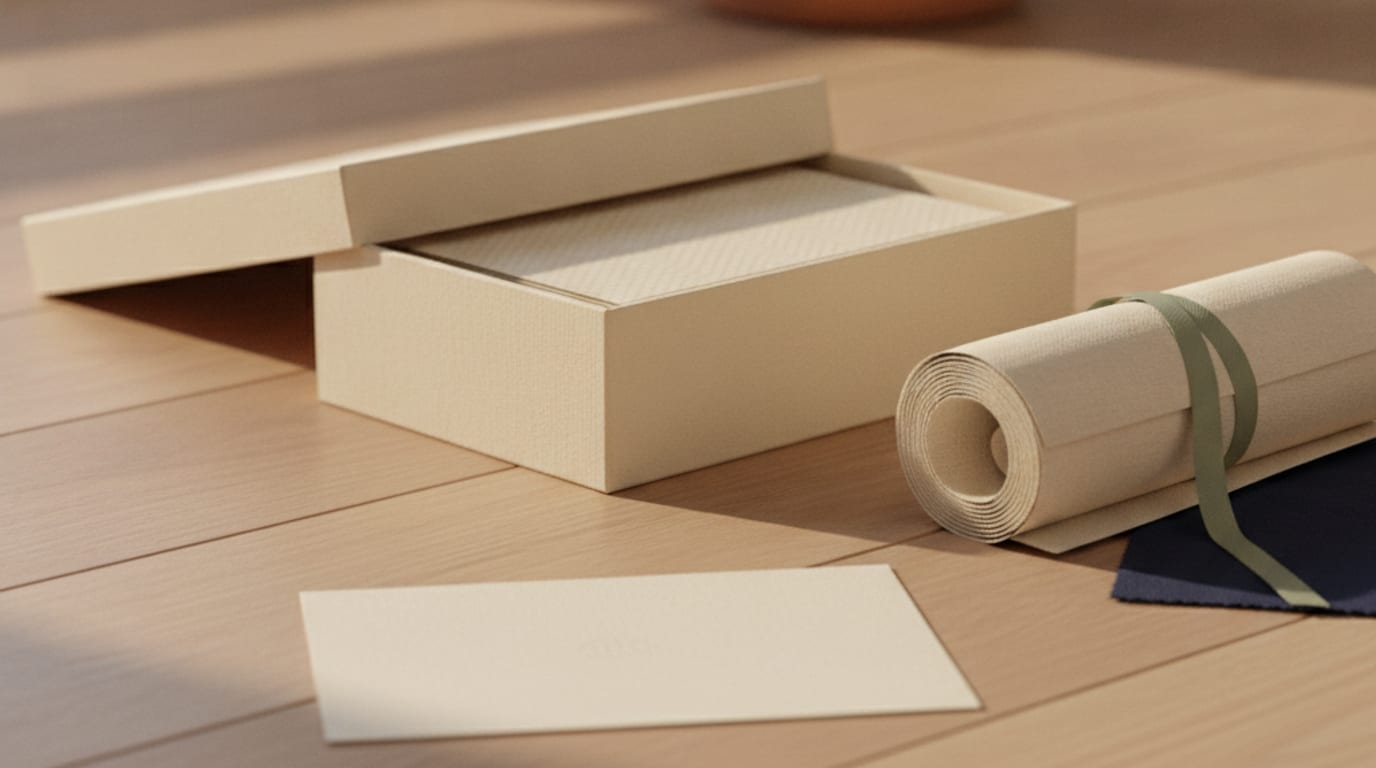
Order fifteen to twenty percent more invitations than you have households on your list. That single decision absorbs almost every guest list change that happens later, and it is far cheaper than any of the alternatives once the press has been cleaned down.
Guest lists move. They always move. A parent remembers a cousin. A friend gets engaged and now there are two names on the envelope instead of one. Someone’s plus one becomes a real person with a real name. Two envelopes get lost in the post and you never find out which two. None of this is a planning failure, it is just what happens between the day you write the list and the day people arrive.
Why a second print run costs so much more than you expect
People assume a reprint of twelve invitations costs roughly a tenth of a reprint of a hundred and twenty. It does not, and understanding why changes how you order.
Almost all of the cost in printing sits at the front. Setting up the press, matching the colour, cutting the stock, and on speciality processes making the plate or the die. Those costs are the same whether you run twelve pieces or two hundred. The paper and the ink, the parts that actually scale with quantity, are the small share. So a run of twelve extra invitations can easily cost close to half of what the original hundred and twenty cost.
There is a second cost that is not money. A reprint takes as long as the original did, and you are ordering it at the point in the calendar when you have the least time left. Turnaround plus mailing plus the runway your late guests need is often three or four weeks you do not have.
The overs you ordered at the start cost you a few dollars of paper. That is the whole argument.
What the extras are actually for
Overs are not only for guests you forgot. Budget them across four uses, and you will find fifteen percent is about right rather than generous:
- Late additions. The genuine ones. New partners, a colleague who becomes a friend, the family member somebody forgot.
- Addressing mistakes. If you or a calligrapher is hand-addressing, a spoilage rate is real. Nobody writes a hundred and fifty envelopes without ruining a few.
- Post that goes missing. Some percentage of anything mailed does not arrive. You want to be able to re-send without ceremony.
- Keepsakes. One for you, one for each set of parents, one for the photographer to shoot on the morning, one for the frame. That is five before you have invited anybody.
The keepsake one surprises people. Photographers routinely ask for a clean, unaddressed suite to shoot in the flat-lay, and if the only one left is the crumpled proof from your desk, that is the one that ends up in your album.
The late addition, handled well
Someone gets added three weeks after everyone else was invited. Here is what actually matters.
Send the same invitation. Not a substitute, not an email, not a photo of it in a text. If they can tell they were the afterthought, they will feel like the afterthought, and that is the entire problem you are trying to avoid.
Do not apologise for the timing in writing. A short note or a phone call saying you would love them there is warm. A written apology inside the envelope draws attention to exactly the thing you would rather they did not notice.
Give them a real reply deadline. If your printed reply date has already passed, do not send an invitation with a dead date on it. Tell them the date verbally, or use digital delivery where the reply instruction can be updated before it goes.
If you are past the point where post will arrive in time, a text-message-sized version of the same design is the right call. Same artwork, same colours, same typography, delivered in a format that arrives instantly. It reads as the same object, which is the point.
You cannot uninvite anybody
This comes up more than you would think, usually when a budget gets cut or a venue reduces its capacity. The answer is that there is no good way to do it, and the honest advice is to build the list so you never have to.
If a friendship has genuinely ended between the printing and the sending, you can hold that envelope back and not mail it. That is the only clean version, and it only works before anything has gone out. Once an invitation has been received, the guest has been invited, and withdrawing it costs a relationship. A venue that seats a hundred and forty and a list of a hundred and sixty is a problem to solve with the venue, not with the guests.
The practical protection is at the start. Build the list in tiers before anything is printed: the people who must be there, the people you want there, and the people you would include if there is room. Print for the first two tiers plus overs. If capacity turns out to be better than you feared, the third tier gets invited from your overs, on time, and nobody ever knows they were a tier.
Setting the quantity properly
Count households, not people. This is the mistake that inflates orders by a third. A married couple at one address receives one invitation. A family with three children receives one invitation. Your list of two hundred and twenty people is very often a hundred and ten envelopes, and if you order two hundred and twenty you have wasted more money than the overs would ever have cost.
Then add your overs on top of the household count. Fifteen percent is the working number for a printed suite with hand addressing. Twenty if the list is under fifty, because percentages get lumpy at small numbers and five spare invitations out of thirty is not extravagant.
Ask about the exact reprint cost before you place the first order. Not the per-piece price, the total for a small second run. Printers will tell you if you ask, and hearing the real number makes the decision about overs obvious.
What this means for the files I give you
Because I deliver digital files rather than printed pieces, the quantity decision stays entirely yours and stays open. Your print-ready PDF prints twelve or two hundred and twelve, today or in three weeks, without coming back to me and without a new fee. If you find eight more households in October, you send the same file to the same printer.
That also means the late-addition problem has a cheaper answer here than it does elsewhere. You already have the artwork. If the post will not get there in time, the story-sized and text-message files come in the same delivery, so the same design can go out by phone the same afternoon.
What I would ask is that you tell me the shape of the list before I start. A suite for forty guests in one town and a suite for two hundred spread across four states are different design problems, and the second one needs its reply mechanics built to survive change.